- MOTIVSPRINT
- Posts
- Become Bulletproof: The Injury-Prevention Regimen
Become Bulletproof: The Injury-Prevention Regimen

Lyle Agagon
December 18, 2025
Sponsored by

EXERCISE 🏋️♂️

Getting hurt sucks. It ruins your progress, sidelines your fun, and can be very frustrating. Whether you play sports, love to lift, or just want to keep up with life, getting injured is one of the worst things that can happen.
But what if you could build a more resilient body? Not literally bulletproof, of course, but tougher, more reliable, and way harder to break down. That’s what an injury-prevention regimen is all about. It’s a simple, consistent plan. Think of it like armoring up from the inside out.
Here’s your guide to building a bulletproof body.
Rule #1: Your Body Works as One Unit
Your body is not a bunch of separate parts. It’s one connected system. If one area is weak, tight, or unstable, other areas take the hit.
Strong arms don’t matter if your shoulders are unstable. Running doesn’t help if your hips are weak. Ignoring one area eventually leads to pain somewhere else.
Your training has to cover the whole body. That means working on what’s tight, weak, or boring, not just what you enjoy.
Balance comes first. That’s how injuries are avoided.
The 4 Pillars That Keep You Injury-Resistant
Skip one, and something breaks down.
1. Good Mobility:
Mobility is your ability to move joints smoothly through their full range. Poor mobility forces your body to compensate, and compensation leads to injury.
Do this:
Spend 5–10 minutes every day moving your joints. Shoulder circles, hip circles, leg swings, spinal twists, cat-cow. Keep it light. The goal is smooth movement, not stretching hard.
Daily mobility keeps joints healthy and movement clean.
2. Strength Support Your Joints
Strength protects your joints. Muscles absorb force so your joints don’t have to.
This isn’t about lifting heavy. It’s about being strong in useful positions.
Do this:
Use simple, full-body movements:
Squats
Lunges
Push-ups
Rows
Planks
Train strength 2–3 times per week. Move with control. Good form matters more than weight.
3. Stability Is Control
Stability is control, especially in your core, hips, and shoulders. These muscles keep you steady when you move.
Poor stability leads to sloppy movement and unnecessary strain.
Do this:
Add balance and control work:
Stand on one leg
Single-leg exercises
Planks and side planks
Even small balance challenges train your body to stay aligned under stress.
4. Recover to Fix Your Body
Workouts break you down. Recovery builds you back up.
Skip recovery, and you slowly fall apart.
Do this:
Sleep 7–9 hours
Drink enough water
Take 1–2 rest days per week
Pay attention to pain (sharp pain means stop)
Recovery is not optional. It’s part of training.
A Simple Weekly Plan
Daily (5–10 minutes)
Joint mobility: shoulders, hips, spine, ankles, wrists.
2 Days per Week (20–30 minutes)
Strength + stability:
Squats – 3×10
Push-ups – 3 sets
Rows – 3×10
Plank – 30–60 seconds
Single-leg balance – 30 seconds per side
2 Days per Week
Cardio you enjoy for 20–30 minutes.
Remaining Days
Light movement or full rest.
The Rule That Matters Most: Consistency
You don’t get resilient from one hard workout. You get resilient from doing small things often.
Five minutes of mobility beats zero.
Two strength workouts beat random bursts of effort.
Sleep beats supplements.
Train smart. Stay balanced. Do it week after week.
That’s how you move better, hurt less, and keep doing what you enjoy for years.
NUTRITION 🥑
Your Micronutrient Guide For Stronger Joints

Your knees, hips, shoulders, and fingers are like amazing, living hinges. They let you move, bend, and groove. But like any hinge, they require care to avoid rust or creaking. Most people think about big things like exercise or heavy-duty supplements. But the real secret is often in the tiny stuff: micronutrients.
Think of micronutrients as the special toolkit your body uses every day to repair, lubricate, and protect your joint cartilage and tissues. This isn't about swallowing a magic pill. It's about giving your body the right, small tools for the job.
Start With the Basics (Non-Negotiable)
Before worrying about supplements, two things must be in place.
1. Water - Joint cartilage is mostly water. When you’re dehydrated, cartilage loses its ability to cushion and absorb force.
What to do:
Drink water throughout the day, not just during workouts.
2. Real Food - Micronutrients only work when your diet is solid. Highly processed foods increase inflammation and crowd out nutrients.
What to do:
Eat vegetables, fruit, protein, and healthy fats most days. This creates the environment your joints need to stay healthy.
The Key Micronutrients for Joint Health
Vitamin C: Builds Joint Tissue - Vitamin C is required to make collagen, the protein that holds cartilage, tendons, and ligaments together.
Why it matters:
No vitamin C = poor collagen repair.Get it from:
Citrus fruit, berries, bell peppers, broccoli, and kiwi.Vitamin D: Supports Bone Strength -Vitamin D helps your body absorb calcium and maintain strong bones under your joints.
Why it matters:
Low vitamin D is linked to joint pain and weakness.Get it from:
Sunlight, fatty fish, egg yolks, fortified foods. Many people need a supplement—check with your doctor.Omega-3s: Reduce Joint Inflammation - Omega-3 fatty acids lower chronic inflammation, which is a major driver of joint stiffness and pain.
Why they matter:
Less inflammation = better joint movement.Get them from:
Salmon, sardines, flaxseed, chia seeds, walnuts.Magnesium: Reduces Stress on Joints - Magnesium helps muscles relax. Tight muscles pull on joints and increase wear.
Why it matters:
Relaxed muscles protect joints and support cartilage health.Get it from:
Leafy greens, nuts, seeds, beans, and avocados.Sulfur (and MSM): Maintains Cartilage - Sulfur is part of the structure that gives cartilage strength and flexibility.
Why it matters:
Healthy cartilage absorbs impact better.Get it from:
Garlic, onions, broccoli, cabbage, eggs. MSM supplements are commonly used for joint support.
A Simple Way to Apply This Daily
You don’t need a perfect plan—just consistency.
Breakfast: Smoothie with spinach, berries, and chia seeds
Lunch: Salad with leafy greens, bell peppers, and salmon
Dinner: Protein with garlic, onions, and broccoli
Snacks: Fruit, almonds, or walnuts
All day: Drink water regularly
About Supplements
Food should come first. Supplements can help if you’re deficient or struggling to meet needs.
Common options:
Fish oil (Omega-3s)
Vitamin D3
Basic multivitamin
Always talk to a healthcare professional before starting supplements.
Here’s the Deal
Joint health isn’t built with one supplement or one workout. It’s built with daily support.
Drink water.
Eat real food.
Get enough key micronutrients.
Small habits done every day keep your joints moving well for years. Start simple: one extra vegetable and one extra glass of water today.
BIOHACKING⚡
The Inside Scoop on Stem Cell Boosters & Micro-Dosing
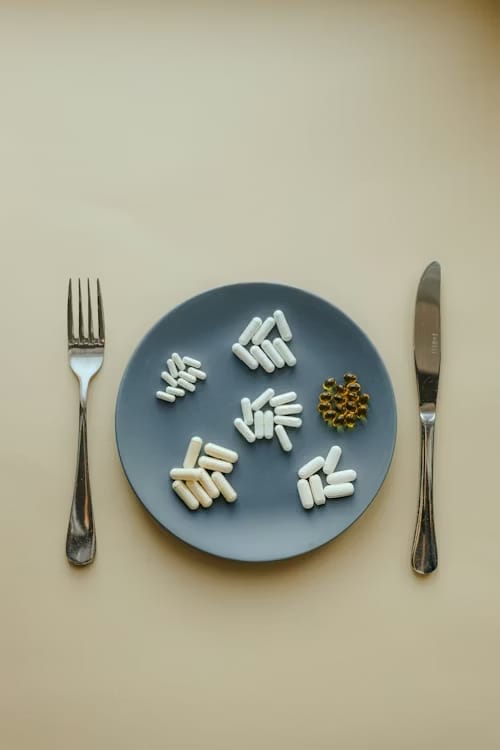
Your body has a built-in repair system called stem cells. These are basic cells that can turn into muscle, bone, skin, or other tissues when something needs fixing. When you’re younger, they work fast. As you age, they slow down. You have fewer of them, and they don’t respond as well.
That’s where the idea of “stem cell boosters” comes from.
What Are “Stem Cell Boosters”?
First, let me clarify that I’m not talking about injecting stem cells. That’s a medical procedure with big risks and very mixed evidence. Most people should stay far away from clinics promising miracle cures.
“Stem cell boosters” usually mean foods, habits, or supplements that may help your own stem cells work better. The goal isn’t to create new stem cells out of thin air. The goal is to improve the environment inside your body so the ones you already have can do their job.
Common examples include:
Fasting or eating less often
When your body isn’t constantly digesting food, it can spend more energy on repair. Some research suggests this may help activate stem cells.Anti-inflammatory foods
Berries, fatty fish, olive oil, and green tea help lower inflammation. Less inflammation means a better working environment for repair cells.Certain supplements
Vitamin D, resveratrol, and quercetin are often studied for cell health. They may help support repair, but they are not cures.
These don’t “boost” stem cells like flipping a switch. They support the system the same way good sleep supports your brain or protein supports muscle.
Micro-Dosing
Micro-dosing means using very small amounts instead of large doses.
In this context, it usually means:
Small, consistent doses of supplements
Instead of taking big doses once in a while, some people take small daily amounts. The idea is gentle support over time, not shock therapy.Less is more
This mindset favors consistency over extremes. Small habits done daily beat aggressive, short-term fixes.
Micro-dosing isn’t magic. It’s just a way of thinking: steady, simple, and sustainable.
The Honest Reality
Here’s the reality check:
This is early science
Some ideas are promising, but the hype is way ahead of the proof. There is no proven pill that turns aging stem cells back to youth.Lifestyle matters more than anything
Sleep, strength training, cardio, stress control, and real food do more for stem cells than any supplement ever will.“Stem cell booster” is a marketing term
Supplements aren’t regulated like drugs. Labels can exaggerate benefits, and quality can vary.Talk to your doctor
Even natural supplements can interact with medications or health conditions.
The Bottom Line
You don’t force stem cells to work better. You support them.
Think of it like maintenance, not a shortcut:
Move your body.
Lift weights.
Eat real food.
Sleep well.
Reduce stress.
Be consistent.
That’s how you help your body repair itself over the long term.
Micro-dosing reminds us that small daily actions matter more than dramatic fixes. If you want better recovery, better aging, and better health, stop chasing miracles and focus on the basics. Done daily, they work.
CHALLENGE💪
Your Bulletproof Challenge of the Week

The Challenge:
For the next 7 days, you will perform 5 minutes of intentional joint mobility work every single day. No excuses. No skipping.
The Plan:
Spend 1 minute on each of these 5 movements. Use a timer on your phone. Do them first thing in the morning, during a TV commercial break, or right before bed.
Neck & Shoulder Rolls (1 min): Gently roll your shoulders forward 10 times, then backward 10 times. Slowly tilt your ear toward your shoulder a few times on each side. No forcing.
Arm Circles & Swings (1 min): Make 15 small forward circles with your arms, then 15 big ones. Reverse it for 15 small and 15 big backward circles. Let your arms swing across your body loosely.
Torso Twists (1 min): Stand with feet shoulder-width apart. Gently twist your upper body side to side, letting your arms swing with the motion. Keep your hips facing forward. Feel your spine move.
Hip Circles (1 min): Put your hands on your hips. Make 10 big, slow circles with your hips clockwise, as if you’re using a hula hoop slowly. Then 10 circles counter-clockwise.
Ankle Rolls & Leg Swings (1 min): Lift one foot and slowly roll your ankle 10 times each direction. Then, hold onto a wall or chair and gently swing one leg forward and back 10 times. Switch legs.
Remember, consistency beats intensity. Five focused minutes every day is better than 35 minutes once a week. Build on this small, powerful habit.
Stop Waiting & Start Losing Weight Before for Just $179

Finally serious about weight loss? Join 500,000 weight loss patients & lose pounds of fat every week. MedVi provides highly effective GLP-1 treatments, personalized guidance, and everything you need to see real, consistent fat-loss results.
There are no membership fees, nothing confusing, and no insurance required. Just one simple, science-backed program that helps you get healthier each week.
Start today for only $179 and get free shipping.
Read all warnings before using GLP-ls. Side-effects may include a risk of thyroid c-cell tumors. Do not use GLP-1s if you or your family have a history of thyroid cancer. In certain situations, where clinically appropriate, a provider may prescribe compounded medication, which is prepared by a state-licensed sterile compounding pharmacy partner. Although compounded drugs are permitted to be prescribed under federal law, they are not FDA-approved and do not undergo FDA review for safety, effectiveness, or manufacturing quality.
QUOTE OF THE WEEK 💬
“The journey of a thousand miles begins with a single step.” – Lao Tzu

REWARDS 🥇
MERCH 👕

 Janelle: Women’s Tee |  Patrick: Coffee Mug |
 Melissa: Unisex Hoodie |  Rodney: Trucker Hat |
Spread the Word!
If you found this content informative, thought-provoking, entertaining, enjoyable, life-saving, or simply awesome, don’t be greedy! Share. It’s FREE!

Reply