- MOTIVSPRINT
- Posts
- Lock It In: Simple Band Drills for Stronger Knees, Shoulders, and Ankles
Lock It In: Simple Band Drills for Stronger Knees, Shoulders, and Ankles

Lyle Agagon
November 27, 2025
In partnership with

EXERCISE 🏋️♂️

Think of your joints—like your knees, shoulders, and ankles—as the hinges on a door. If the hinges are loose, the door gets wobbly and might even break. But if the hinges are strong and secure, the door works perfectly for years.
That’s what joint stability is all about. It’s not just about big muscles; it’s about training the small muscles around your joints to work together and keep everything stable. And one of the best tools for this is a simple resistance band. They’re cheap, portable, and perfect for these little drills.
Here are some easy banded drills you can do almost anywhere to help your knees, shoulders, and ankles feel stronger and more secure.
1. Ankle Stability: Fighting the Wobble
Your ankles take a beating every day. A wobbly ankle can lead to a nasty sprain, especially if you run, play sports, or just walk on uneven ground. These drills help your ankles fight against the band, teaching them to stay strong in all directions.
Drill 1: Ankle Alphabets (but with a band!)
How to do it: Sit in a chair and loop a light resistance band around the top of one foot. Hold the ends of the band to create some tension. Now, slowly trace the letters of the alphabet with your toe, fighting the band's pull the whole time.
Why it works: It makes all the tiny muscles around your ankle work through their full range of motion, building strength in every direction.
Drill 2: Ankle Inversions & Eversions
How to do it: Sit on the floor with your legs straight. Loop the band around one foot and anchor the other end to a sturdy table leg or something that won’t move.
For Inversions, the band should be pulling your foot outward. Now, pull your foot inward against the band’s resistance, like you’re trying to point your big toe at your other leg.
For Eversions, switch the band so it’s pulling your foot inward. Now, push your foot outward against the resistance.
Why it works: These movements directly target the muscles that prevent common ankle sprains.
2. Knee Stability: Keeping the Hinge Aligned
The knee is a simple hinge joint, but it relies heavily on the muscles around your hip and thigh to keep it tracking properly. A stable knee means less pain and a lower chance of injury.
Drill 1: Monster Walks
How to do it: Place a mini-band (a small, circular band) around your ankles or just above your knees. Stand with your feet shoulder-width apart, so the band is under tension. Slightly bend your knees and get into a mini-athletic stance. Now, take slow, controlled steps forward, to the side, and backward, without letting your knees cave inward. You’ll look like a monster stomping around—hence the name!
Why it works: This fires up your glutes and hip muscles, which are crucial for stopping your knee from collapsing inward when you run or squat.
Drill 2: Terminal Knee Extensions
How to do it: Anchor a long band to something sturdy at about knee-height. Step into the band with one leg so it loops behind your knee. Step back to create tension and face away from the anchor point. Slightly bend your knee, then push back against the band to straighten your leg completely, squeezing your thigh muscle at the top.
Why it works: This focuses on the very last part of straightening your knee, which is key for locking in stability when you stand or push off the ground.
3. Shoulder Stability: Building a Strong Socket
Your shoulder is the most mobile joint in your body, which also makes it the most unstable. It’s like a golf ball sitting on a tee. These drills help build the muscles that keep that “golf ball” securely in its socket.
Drill 1: Banded Pull-Aparts
How to do it: Grab a light-to-medium resistance band with both hands, palms facing down. Hold it with your hands shoulder-width apart. Keeping your arms straight, pull the band apart by squeezing your shoulder blades together. Pause when the band touches your chest, then slowly return to the start.
Why it works: This is a superstar exercise for your upper back and rear shoulder muscles, which help pull your shoulders back into a strong, stable position.
Drill 2: No-Money Drill
How to do it: Hold a light resistance band in both hands in front of you with your elbows bent at 90 degrees, like a goalpost. Your fists should be facing each other. Without moving your elbows, rotate your hands outward, as if someone was trying to take your money and you’re saying “no money!” Squeeze your shoulder blades as you open up.
Why it works: This directly targets the tiny rotator cuff muscles that are essential for shoulder health and preventing pinching or pain.
To Wrap Up
Doing these simple drills just 2-3 times a week can make a huge difference. You don’t need to go to the gym or spend hours. You can do them while watching TV!
Remember, the goal isn’t to get a crazy burn or use the heaviest band. It’s about control. Move slowly and focus on feeling the right muscles working. Strong, stable joints are the secret to moving freely and staying active for a long, long time. So grab a band and start locking those hinges in.
NUTRITION 🥑
Stronger Joints, Skin, and Tendons: Collagen + Vitamin C
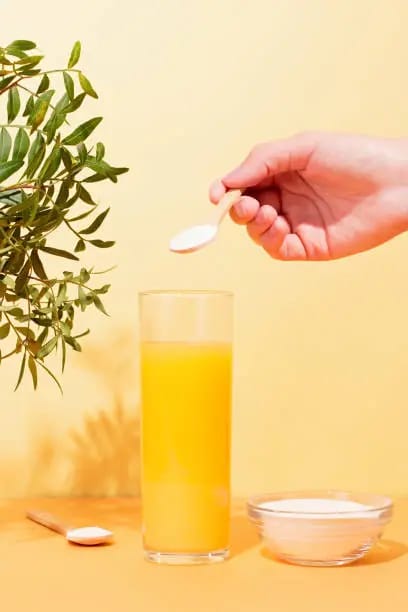
You’ve probably heard of collagen. It’s that stuff in fancy skin creams and protein powders. And you for sure know about vitamin C. It’s in your morning orange juice. But did you know that when they work together in your body, they do something amazing for your connective tissues?
First, let's talk about what connective tissue is. It’s the material in your body that supports, connects, and protects everything else. It’s not an organ. It’s the framework. Connective tissue includes:
Tendons: The ropes that connect your muscles to your bones.
Ligaments: The strong bands that connect bones to other bones at your joints.
Cartilage: The cushiony padding in your knees and between your spinal bones.
Your Skin: Yep, your skin is a huge part of your connective tissue!
All of this connective tissue is made from one main protein, collagen. It’s the most common protein in your whole body. Collagen gives your skin firmness, your tendons strength, and your cartilage the cushion it needs to absorb impact.
Here’s the key: your body can’t just take collagen from food or supplements and plug it in. It has to make its own. And to build new collagen, your body needs the right ingredients.
That’s where vitamin C is key.
Think of collagen as a long, sturdy rope your body is trying to form. Vitamin C is the worker that tightens and secures each strand so the rope becomes strong and stable. Without enough vitamin C, those strands don’t hold together well — and your collagen ends up weak and poorly built.
If your body can’t make strong collagen, your connective tissues suffer. You might not see it right away, but over time, it can lead to:
Skin that’s less springy and more wrinkled.
Tendons and ligaments that are more easily injured.
Joints that feel achy because the cartilage isn’t as cushy.
Longer healing times for cuts and sprains.
This powerful partnership is why sailors from the old days got a disease called scurvy. On long voyages with no fresh fruit (which has vitamin C), their bodies couldn't make collagen. Their connective tissues literally started falling apart—their gums bled, old wounds reopened, and they had terrible joint pain. All because they were missing that one key ingredient: vitamin C.
So, how do you make sure you’re getting this dynamic duo?
Getting Your Collagen & Vitamin C
Your body is pretty smart. If you give it the right tools, it knows exactly what to do.
For Collagen: You can find collagen in foods like bone broth, chicken with the skin on, and fish. Your body can also use the protein from eggs, beans, and meat to build its own collagen from scratch. Collagen supplements (called collagen peptides) are also popular and easy to mix into drinks.
For Vitamin C: This is the easy part. Vitamin C is everywhere in the fruit and veggie aisle. Oranges, strawberries, and kiwi are famous for it. But don’t forget about bell peppers (the red ones are packed with it!), broccoli, tomatoes, and even potatoes.
The Magic Combo
Don’t complicate any of this. Just pair collagen (or protein) with vitamin C. That’s it.
Try these easy combos:
Mix collagen powder into orange juice.
Eat a chicken salad with bell peppers or broccoli.
Add berries to your breakfast eggs.
Drink water with lemon after a protein-heavy meal.
When you match collagen-building protein with vitamin C, your body gets everything it needs to make strong, flexible connective tissue. It’s one of the simplest habits you can build, and your body will notice the difference.
BIOHACKING⚡
Zap Your Way to Healing
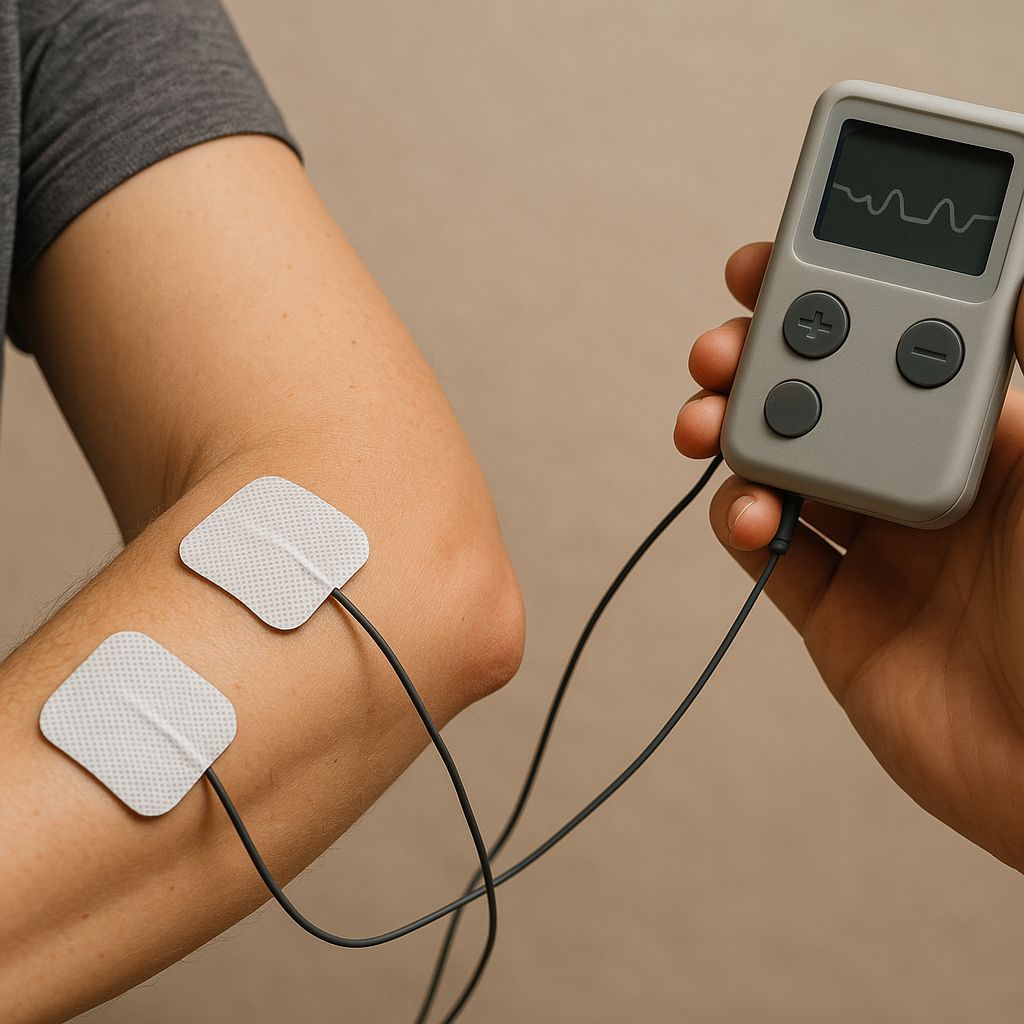
No pain, no gain! But what about when the pain is the problem? If you’ve ever dealt with a sore tendon—like in tennis elbow, Achilles tendinitis, or a shoulder injury—you know it can be a real drag. The healing process can feel super slow.
What if you could speed up healing by using a tiny, gentle electrical current? It’s not sci-fi. It’s a real treatment called microcurrent or e-stim. Let’s break down what it is and how it can help sore, irritated tendons recover faster.
What Are Tendons?
Think of tendons as tough, stretchy ropes that connect your muscles to your bones. When you move, your muscle pulls on the tendon, and the tendon tugs on the bone. That’s how you lift your arm or take a step.
The problem is, these “ropes” don’t have a great blood supply. Blood carries all the oxygen and nutrients your body uses to fix damage. So, when a tendon gets injured, it’s like a construction site with very few delivery trucks. The repair job just takes a long, long time. This is why tendon injuries can linger for weeks or even months.
How Can Electricity Help?
This is where microcurrent comes in. We’re not talking about the kind of electricity that powers your TV. This is a very, very low-level current—so low that you often can’t even feel it.
Our bodies already run on tiny electrical signals. Your nerves use them to send messages. Your cells use them to talk to each other. Microcurrent therapy works by giving those cells a small boost using the same kind of signals your body already uses.
Here’s what scientists think might be going on when you use microcurrent on an irritated tendon:
• Helping Cells “Recharge”:
Injured cells don’t hold energy well — kind of like a phone on low battery. Microcurrent may help them recharge so they can repair themselves more effectively.
• Nudging Out Natural Pain Relief:
The gentle current may trigger the release of endorphins, your body’s built-in painkillers. This can make the area feel calmer and less sensitive.
• Boosting Cellular Energy (ATP):
Some studies show microcurrent can increase ATP, the energy fuel inside every cell. More ATP means your cells have the power to rebuild tissue and reduce inflammation.
• Soothing Swelling:
Tendon injuries often bring swelling and irritation. Microcurrent may help settle that down, making the area feel less stiff and sore.
What’s It Actually Like to Get This Treatment?
If you go to a physical therapist or a chiropractor for this, it’s pretty simple. They’ll place small sticky pads, called electrodes, on your skin right over the injured tendon. These pads are connected to a small machine. The therapist will turn it on, and you might feel a very slight tingling sensation, or maybe nothing at all. You’ll just sit or lie still for about 15-20 minutes while the device does its work. It’s a totally passive treatment—your only job is to relax!
You can also buy small, at-home units. But it’s always a smart move to talk to a doctor or therapist first. They can make sure you’re using it correctly and for the right kind of injury.
Is It a Miracle Cure?
Here’s the truth. Microcurrent isn’t a miracle cure. It won’t heal a severely torn tendon overnight. But for many people, it can be a helpful piece of the healing puzzle.
Think of it this way: your cells do the real repair work. Microcurrent gives them clearer signals and more energy, so they can work faster and better.
It works best when you combine it with other smart choices, like:
Rest: Giving the tendon a break from the activity that hurts it.
Proper Rehab: Doing the specific stretches and strengthening exercises your therapist gives you.
Good Nutrition: Eating healthy foods that give your body the building blocks it needs to repair itself.
If you’re dealing with a stubborn tendon injury, microcurrent is worth bringing up with your doctor. It’s gentle, safe, drug-free, and gives your body a simple nudge to speed up healing. Sometimes your cells just need a small spark to get things moving again.
CHALLENGE💪

The “Grateful & Strong” Thanksgiving Challenge 🦃💪
Goal
Stay active, eat mindfully, and boost gratitude all week—without feeling like you’re “on a diet” during Thanksgiving.
Your Daily Challenge (Sun–Sat)
Do these 3 simple things every day this week:
1. Gratitude 3×3
Each day, write down:
3 people you’re grateful for
3 things you’re grateful for
3 wins from the last year (big or small)
Takes 3 minutes. Do it with your morning coffee or before bed.
2. Turkey Walks: 20 Minutes After Your Biggest Meal
Once a day, after your biggest meal:
Go for a 20-minute walk
Walk with family, a friend, or solo with music/podcast
On Thanksgiving Day itself, aim for two 15-minute walks (after lunch and dinner)
3. The “One Plate + One Treat” Rule
At big meals (especially Thanksgiving):
One plate of food (no stacking it sky-high)
You can go back only for veggies or protein (turkey, green beans, salad, etc.)
Pick one favorite dessert and truly enjoy it—slowly
No guilt. No counting. Just simple guardrails.
🦃 Thanksgiving Day Bonus Points!
Pick one:
Do a quick 10-minute bodyweight circuit in the morning
10 squats
10 pushups (on knees or wall if needed)
20 seconds plank
Repeat 3–4 times
OR
Call/text someone you haven’t spoken to in a while and tell them you’re grateful for them.
QUOTE OF THE WEEK 💬
"If it doesn't challenge you, it won't change you." - Fred Devito
Stock Up Before It’s Gone: Sun Goddess Matcha Sale!

Fuel calm energy and radiant skin with Pique’s Sun Goddess Matcha. Ceremonial-grade, organic, and antioxidant-rich, it’s the perfect ritual for steady focus and inside-out beauty. Stock up or gift the glow—because everyone deserves calm energy, luminous skin, and a moment of peace this holiday season.
REWARDS 🥇
MERCH 👕

 Janelle: Women’s Tee |  Patrick: Coffee Mug |
 Melissa: Unisex Hoodie |  Rodney: Trucker Hat |
Spread the Word!
If you found this content informative, thought-provoking, entertaining, enjoyable, life-saving, or simply awesome, don’t be greedy! Share. It’s FREE!

Reply