- MOTIVSPRINT
- Posts
- One Side at a Time: Fix Your Imbalances with Unilateral Training
One Side at a Time: Fix Your Imbalances with Unilateral Training

Lyle Agagon
April 02, 2026
Sponsored by

Websites That Bring You Customers — Built in 72 Hours.
EXERCISE 🏋️♂️
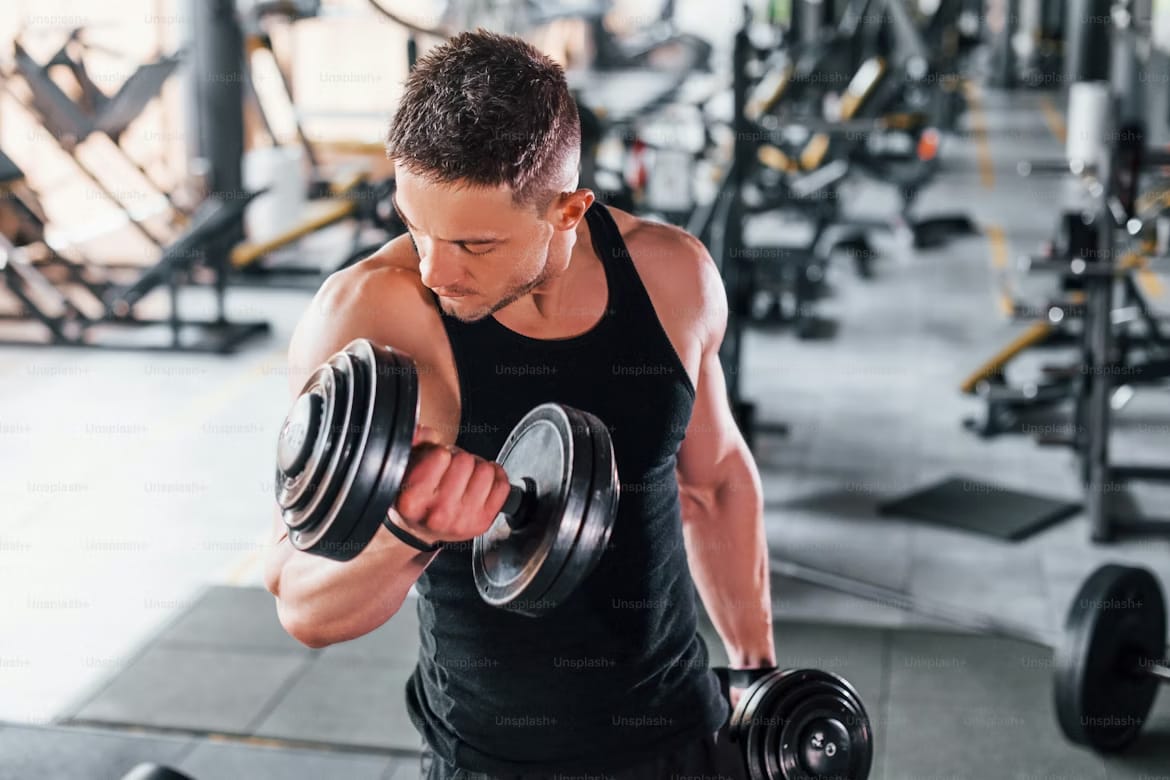
Most people train both sides at once. Both legs on the squat bar. Both hands on the bench press. Both arms curling. That works. But it hides a problem.
Your dominant side quietly carries more of the load. Over months and years, one side gets stronger, while the other falls behind. That gap doesn’t stay small. It grows. And eventually it shows up as an injury, poor form, or a plateau you can’t break through.
The fix — unilateral training. One limb at a time.
What Is Unilateral Training?
Unilateral means one-sided. You train one arm or one leg independently instead of both at once.
Common unilateral exercises:
Single-leg Romanian deadlift
Bulgarian split squat
Single-arm dumbbell press
Single-arm dumbbell row
Step-ups
Single-leg calf raise
None of these is unfamiliar. Most people have done at least one. The key is making them a consistent part of your program, not just an afterthought.
Why One Side at a Time Works
When you train both sides together, your stronger side compensates. It doesn’t ask for permission. It just takes over. The weaker side gets a free ride.
When you train one side at a time, there’s nowhere to hide. Each side has to do its own work. That’s where the real gains happen.
It finds your weak side. You’ll notice it fast. If your right leg can do 10 clean Bulgarian split squats and your left leg struggles at 7, you have your answer. Now you can fix it.
It builds balanced strength. When both sides are equally strong, you lift more total weight on bilateral movements. A stronger left leg makes your squat heavier. A stronger left arm improves your bench.
It improves stability and coordination. Single-leg movements force your hips, glutes, and core to stabilize without help from the other side. That transfers directly to real life.
It reduces injury risk. Imbalances put asymmetrical stress on joints. Your knees, hips, and shoulders pay for it. Fixing the imbalance keeps you training longer.
What the Research Shows
Studies consistently show that unilateral training improves both sides, even the side that wasn’t trained. Researchers call this the “cross-education” effect. A 2019 meta-analysis in the Journal of Strength and Conditioning Research found that unilateral training produced comparable muscle growth to bilateral training, with the added benefit of correcting asymmetries.
How to Add It to Your Training
You don’t need to overhaul your whole program. Start simple.
Pick one unilateral exercise per muscle group per week. Lead with your weak side first. Match the reps on your strong side. Don’t let it do more. Over time, the gap will close.
A simple weekly template:
Lower body: Bulgarian split squat or single-leg Romanian deadlift
Lower body: Single-leg calf raise
Upper body: Single-arm dumbbell press
Upper body: Single-arm dumbbell curl
Upper body: Single-arm dumbbell row
Two to three sets each. Lead with your weaker side. Rest between sides.
If you already train 4–5 days a week, swap one bilateral exercise per session for its unilateral version. That’s enough to make a difference.
Fix It Before Your Body Forces You To
You’re not symmetrical. Nobody is. But most training programs will have you training only bilateral exercises. Add one unilateral exercise per muscle group, lead with the weak side, and match reps. Give it a few weeks. The imbalance will close, and your bilateral lifts will follow.
NUTRITION 🥑
Creatine: What It Actually Does and How to Use It
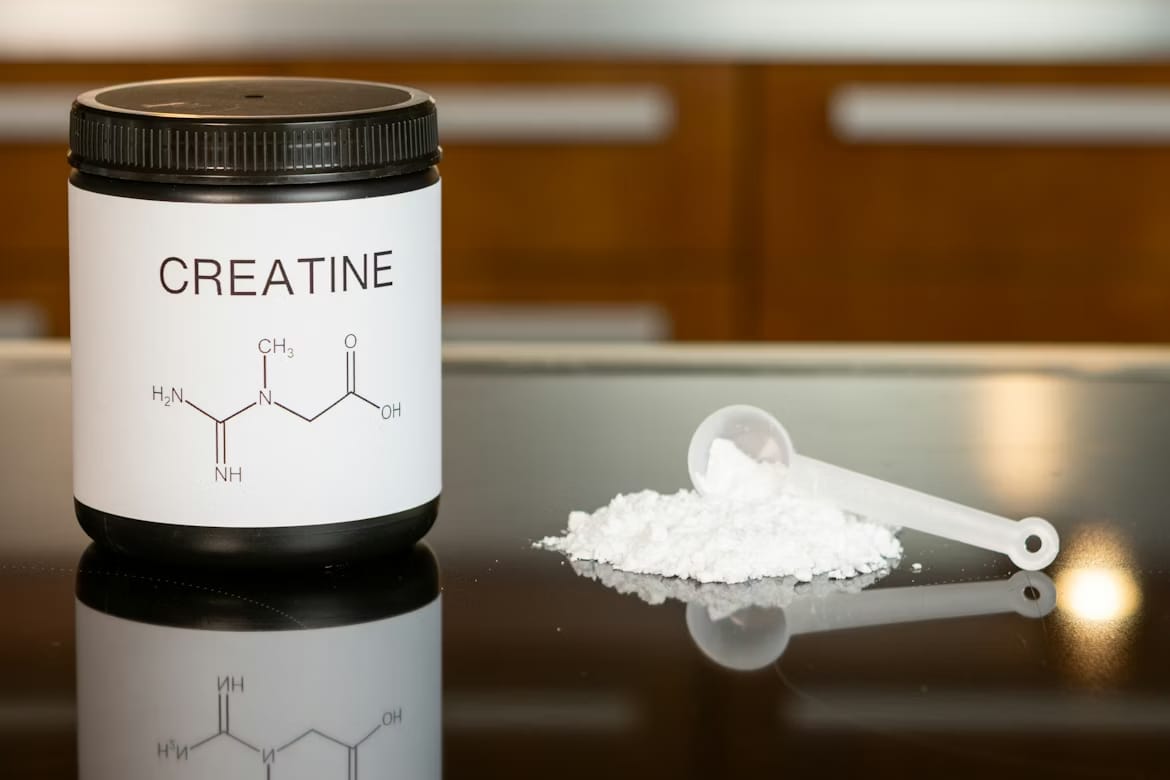
Creatine is the most researched supplement in sports science history. That’s not marketing. That’s fact.
Hundreds of studies over decades. The results are consistent. It works. It’s safe. And most people still use it wrong. Or avoid it because they’ve heard things that aren’t true.
Let’s clear that up.
What Creatine Actually Is
Creatine is not a steroid. It’s not a hormone. It’s a compound your body makes naturally from amino acids your liver synthesizes. You also get small amounts from eating red meat and fish.
Your muscles store creatine as phosphocreatine. That phosphocreatine rapidly regenerates ATP (your body’s primary energy currency) during short, intense bursts of effort.
Your muscles run on a fast-burning fuel system. Creatine keeps that system stocked. Fuller stores mean more output and faster recovery between sets.
What Creatine Actually Does
Creatine supplementation increases muscle phosphocreatine stores by 10–40%. That translates to real performance gains.
What the evidence consistently shows:
More reps at a given weight
More total volume per session
Faster recovery between sets
Modest but real gains in muscle mass over time
Potential cognitive benefits — especially in vegetarians and under sleep deprivation
A 2017 review in the Journal of the International Society of Sports Nutrition confirmed creatine monohydrate is safe for long-term use in healthy adults with no evidence of kidney damage in people without pre-existing kidney disease.
What Creatine Doesn’t Do
Creatine is not a fat burner. It’s not a hormone booster. There’s no stimulant buzz. It won’t make you huge on its own.
It gives your muscles more fuel so you can do more work. That work is what builds muscle and strength.
It does cause some water retention inside the muscle cell — not under the skin. This can add 1–3 pounds on the scale initially. That’s not fat. It’s water inside the muscle, which is associated with improved performance and protein synthesis.
How to Use It
Form: Creatine monohydrate. Nothing else needed. It’s the most studied, most effective, and cheapest form available.
Dose: 3–5 grams per day. A flat teaspoon.
Loading phase: Optional. You can load with 20 grams daily for 5–7 days to saturate muscles faster. Or skip it and take 5 grams daily. You’ll reach the same saturation in 3–4 weeks.
Timing: Matters less than consistency. Post-workout may have a small edge, but just take it daily.
Cycling: No need. You can take it year-round.
The Simplest Decision You’ll Make All Year
Creatine monohydrate. Three to five grams. Every day. You don’t need to load, cycle, or time it precisely. Just take it. It’s the most studied supplement in sports science and one of the very few that consistently earns its place.
BIOHACKING⚡
Caffeine Timing: The Difference Between a Good Lift and a Great One
Most people drink coffee because it helps them wake up. That’s fine. But if you train, you’re leaving a meaningful performance edge on the table by not being more deliberate about when you take it.
What Caffeine Actually Does in the Body
Caffeine works by blocking adenosine receptors in the brain. Adenosine is the chemical that builds up over the course of the day and makes you feel tired. When caffeine blocks those receptors, fatigue signals don’t get through.
For strength training, the effects go beyond alertness. Caffeine directly improves neuromuscular function, the connection between your brain and your muscles. It increases motor unit recruitment, reduces perceived effort, and raises pain tolerance. In plain terms: you can recruit more muscle, work harder, and push further before your brain tells you to stop.
What the Research Shows
The evidence on caffeine and strength performance is some of the most consistent in sports science.
Strength output: A 2020 study in the British Journal of Sports Medicine found that caffeine significantly improved muscle strength and power, with average strength gains of about 3–5% over placebo.
Muscular endurance: Multiple studies show caffeine allows lifters to complete more reps at a given weight before failure — meaning more total training volume per session.
Pain tolerance: Caffeine raises your pain threshold during exercise. Sets that would normally feel like a 9 out of 10 feel more like a 7. That gap translates directly to more reps.
The Timing Window
This is where most people get it wrong. Caffeine peaks in your bloodstream 45–60 minutes after you consume it. If you drink your coffee right before you start lifting, you’re warming up on the way up and peaking mid-session. By the time you get to your heaviest sets, you’re already on the decline.
The fix: take caffeine 45–60 minutes before you want to be at full intensity. If your session starts at 6:00 AM, caffeine goes in at 5:00–5:15 AM. If you train at 6:00 PM, you’re taking it around 5:00–5:15 PM.
How Much and What Form
Dose: 3–6 mg per kilogram of bodyweight. For a 180 lb (82 kg) person, that’s roughly 245–490 mg. Most research clusters the sweet spot around 3–4 mg/kg. More is not better. Above 6 mg/kg, side effects increase, and performance gains plateau.
Form: Caffeine anhydrous (pills or powder) is the most precise option and what most studies use. Coffee works but varies widely in caffeine content. A 12 oz cup can range from 80–200 mg, depending on the roast and brew method.
Tolerance: Regular caffeine users build tolerance fast. If you drink coffee all day, the performance boost will be blunted. One practical fix: take 1–2 days off caffeine per week, or cycle off for a week every 4–6 weeks to reset sensitivity.
The Cortisol Problem with Morning Training
If you train first thing in the morning, there’s one more thing worth knowing. Cortisol, your body’s natural alertness hormone, peaks in the first 30–60 minutes after you wake up. This is called the cortisol awakening response (CAR). Taking caffeine during this window stacks caffeine on top of already-elevated cortisol, which can increase energy crashes and anxiety later in the day.
A simple fix: wait 90 minutes after waking before taking caffeine, then time it 45–60 minutes before your training starts. It takes a little planning, but the tradeoff is a cleaner, more stable energy curve.
Time It Right, Train Better
Caffeine is one of the most effective legal performance tools available. Most people use it. Few people use it well. Nail the timing. Drink your coffee 45 to 60 minutes before your heavy sets, not before your warmup, manage your tolerance, and you’ll feel the difference in the weight room within a week.

CHALLENGE💪
Challenge of the Week: The One-Side Test

This week, find your imbalance.
Pick one lower-body and one upper-body unilateral exercise from any below (or one that you want to do that’s not on the list):
Lower body: Bulgarian split squat or single-leg Romanian deadlift
Lower body: Single-leg calf raise
Upper body: Single-arm dumbbell press
Upper body: Single-arm dumbbell curl
Upper body: Single-arm dumbbell row
Do 10 reps on each side with bodyweight or light weight. Note which side feels weaker, shakier, or more awkward.
That’s your target side.
For the rest of the week, every time you train your upper and lower body, start with that weaker side. Do all your reps on that side first. Then match them exactly on the strong side. Don’t let the strong side do more. Let the weak side catch up.
QUOTE OF THE WEEK 💬
“When adversity strikes, that's when you have to be the most calm. Take a step back, stay strong, stay grounded and press on.” — LL Cool J
MERCH 👕

 Janelle: Women’s Tee |  Patrick: Coffee Mug |
 Melissa: Unisex Hoodie |  Rodney: Trucker Hat |
Spread the Word!
If you found this content informative, thought-provoking, entertaining, enjoyable, life-saving, or simply awesome, don’t be greedy! Share. It’s FREE!

Reply