- MOTIVSPRINT
- Posts
- The Brain Owner's Manual: How to Build a Smarter, Sharper Mind for Life (Deep Dive)
The Brain Owner's Manual: How to Build a Smarter, Sharper Mind for Life (Deep Dive)

Lyle Agagon
March 05, 2026
Sponsored by
SprintLaunch Digital
Websites That Bring You Customers — Built in 72 Hours.
Your brain is the most valuable asset you have. It controls every breath, every thought, and every memory that shapes who you are. Yet most people ignore it until something starts to break down.
Neuroscience research makes one thing clear: the brain isn’t fixed with the hardware it started with. It can change, strengthen, and adapt over time. With the right habits, it can be upgraded, protected, and even some of the damage from aging can be repaired.
EXERCISE 🏋️♂️
Train Your Brain Through Your Body

Here's something most people get backwards: you don't exercise to build muscle. You exercise to build your brain. The muscle is just a bonus.
Every time you move your body, you are doing more than burning calories or building strength. You are sending a signal to your brain that the body needs to be alert and ready. And the brain responds.
Increase BDNF
There’s one protein you should know about: BDNF (brain-derived neurotrophic factor). Scientists often describe it as fertilizer for your brain.
When BDNF is high, your brain builds new connections, learns faster, and repairs itself better. When BDNF is low, your brain becomes slower and weaker over time.
Here’s the key point: exercise is the most powerful way to raise BDNF. Not supplements. Not drugs. Movement.
When you exercise, your muscle fibers release something called PGC-1 alpha. That signal helps your body break down a harmful molecule called kynurenine, which is linked to depression and brain fog. Clear it out, and your brain works better.
Exercise also increases blood flow to your brain. More blood means more oxygen. More oxygen means more energy. More energy means clearer, faster thinking.
The Part of Your Brain That Can Actually Grow Back
For decades, scientists thought you were born with all the brain cells you'd ever get. Then they discovered neurogenesis, the birth of new brain cells. And most of this happens in your hippocampus. That's your memory center. It's also one of the first places to shrink as you age.
Exercise literally grows your hippocampus. One study scanned the brains of older adults after they started exercising. After a year, their hippocampus had actually increased in size. The control group, who just sat around, lost volume. So it’s your choice. Grow it or lose it.
Which Exercise Actually Works?
You don't need to be an athlete. You don't need to run marathons. But you do need to be strategic.
Strength Training
Lifting weights makes your brain work harder to activate your muscles. Over time, that builds stronger connections between your brain and your body.
Research shows that strength training just two times a week helps protect the brain’s white matter, the wiring that lets different parts of the brain talk to each other. When that wiring weakens, thinking gets slower. Lifting helps keep those connections strong.
The Cardio (Zone 2)
This is exercise that gets you breathing hard but still able to hold a conversation. Think brisk walking on an incline, jogging, or cycling. Do it for about 45 minutes, and your brain releases a surge of BDNF. Blood flow to the brain rises right away. Keep doing it regularly, and your brain builds more tiny blood vessels, which means more pathways for oxygen and nutrients to reach your brain cells.
HIIT
High-intensity interval training (short bursts of all-out effort followed by a few minutes of recovery) pushes your body to produce lactate. Your brain can use lactate as fuel. It also triggers the release of growth hormone, which helps repair brain cells. Twice a week is plenty. More than that, and you're just beating yourself up.
The Protocol That Actually Works
Here's what the research says works.
Monday and Thursday: Lift something heavy. Squats, deadlifts, pushups. Nothing fancy. Just challenge your muscles. Three sets of eight to twelve reps.
Tuesday, Friday, and Sunday: Zone 2 cardio. Forty-five minutes on a bike, treadmill, or walking outside. You should be able to talk, but just barely.
Wednesday: HIIT. Six rounds of one minute hard, two minutes easy. On a bike or rower. Sprint, recover, repeat.
That's it. Five to six hours a week. Your brain will thank you.
The Immediate Payoff
You may wonder how long it takes to feel the effects of exercise. The answer is immediately. A single workout raises dopamine, serotonin, and norepinephrine, chemicals that improve focus, motivation, and mood. That is why thinking often feels clearer after a walk and why mood improves after a workout.
The long-term benefits are even more impressive. People who exercise regularly in midlife reduce their risk of dementia by about half. Not by a small amount. By roughly fifty percent.
NUTRITION 🥑
The Cognitive Longevity Diet

Let's talk about what you're eating. Actually, let's talk about what's eating your brain.
Sugar. Processed oils. The wrong fats. They're not just making your pants tighter. They're slowly damaging the only brain you'll ever have.
Here's what happens inside your head when you eat garbage.
The Blood Sugar Spike Is Killing Your Focus
Every time you eat something made of white flour or sugar, your blood sugar spikes. Your pancreas releases insulin to shove that sugar into cells. Then your blood sugar crashes. You feel tired, foggy, and hungry again.
That cycle—spike, crash, spike, crash—is brutal on your brain.
Your brain runs on glucose, but it needs steady glucose. Not floods and famines. When your blood sugar swings wildly, your brain cells get stressed. Over time, that stress turns into inflammation. And inflammation in the brain is the beginning of the end.
This is why type 2 diabetes doubles your risk of Alzheimer's. Some researchers even call Alzheimer's "type 3 diabetes." The link is that strong.
Fat For Your Brain
Your brain is sixty percent fat. Literally. It's the fattiest organ in your body.
And the most important fat for your brain is DHA, a type of omega-3. DHA is a building block for brain cell membranes. Without enough, your cells get stiff and communication slows down. With enough, your cells stay flexible and signals flow fast.
Where do you get DHA? Fatty fish. Salmon, mackerel, sardines, anchovies. If you don't eat fish, you're probably low. Most people are.
Studies show that people with higher omega-3 levels have bigger brains and better memory. One study followed older adults for seven years. Those with the highest omega-3 levels had brains that looked two years younger.
The Plants That Protect You
Plants don't want to be eaten. So they produce compounds called polyphenols to defend themselves. When you eat those plants, those compounds defend you, too.
Polyphenols are like brain insurance. They reduce inflammation. They clean up free radicals. They even help clear out the amyloid plaques that build up in Alzheimer's.
The best sources? Berries. Blueberries, especially. One study gave older adults blueberry powder every day. After ninety days, their cognitive scores improved. Not just maintained. Improved.
Dark leafy greens like kale, spinach, and collards are also great for the brain. They're packed with vitamin E, folate, and lutein, all linked to slower cognitive decline. One serving of greens a day gives you brain protection that lasts for years.
Green tea, dark chocolate (the real stuff, not sugar bars), and olive oil all deliver polyphenols, as well. This isn't about eating weird foods. It's about eating real foods.
What to Cut
Here's what needs to go:
Industrial seed oils. Soybean oil, corn oil, canola oil, vegetable oil. They're high in omega-6 fats that promote inflammation when you eat too many. And we all eat too many because they're in everything. Cook with olive oil, butter, or avocado oil instead.
Refined sugar and flour. Soda, white bread, pastries, and most breakfast cereals. They spike your blood sugar and give you nothing in return. No vitamins, no minerals, no fiber. Just inflammation.
Highly processed foods. If it comes in a bag or box and has ingredients you can't pronounce, your brain doesn't want it. These foods are designed to be addictive, not nourishing.
The Eating Pattern That Works
The Mediterranean diet has more research behind it than any other eating pattern. Not because it's fancy, but because it's simple.
Lots of vegetables. Fish a few times a week. Olive oil as your main fat. Nuts and seeds. Some fruit. Maybe a little red wine if you drink. Very little sugar, very little processed food.
The MIND diet (a hybrid of Mediterranean and DASH diets) was designed specifically for brain health. Studies show that people who follow it closely have brains that function like they're seven and a half years younger.
Here's what that looks like on your plate:
Breakfast: Eggs cooked in olive oil with spinach and a handful of berries.
Lunch: Big salad with greens, tomatoes, cucumbers, olives, and a can of sardines or leftover salmon.
Dinner: Piece of fish or chicken, roasted vegetables drizzled with olive oil, and a small serving of beans or lentils.
Snacks: Handful of walnuts, an apple, dark chocolate, or carrot sticks with hummus.
Nothing crazy. Nothing you can't find at any grocery store.
All About Timing
When you eat matters almost as much as what you eat.
Most of us graze all day. Breakfast, snack, lunch, snack, dinner, dessert. Our insulin never gets a break. And insulin is a storage hormone—it tells your body to store fat, not burn it.
Giving your digestive system a rest (twelve hours between dinner and breakfast) lets your body clean house. This triggers autophagy, a process where your cells clear out junk. Including junk in your brain.
Try finishing dinner by seven or eight and not eating again until seven or eight the next morning. That's twelve hours. Your brain gets a deep clean while you sleep.
BIOHACKING⚡
The Lifespan Brain Stack + Neuro-Regeneration Hacks

Okay. You're moving your body. You're eating right. Now let's talk about the extras. The things that take brain health from good to exceptional.
I'm going to be honest with you about supplements. Most of them are expensive pee. The supplement industry is full of garbage products that do nothing. But some compounds have real research behind them. Some actually work.
Here's what's worth your money.
The Supplements That Survived the Research
Lion's Mane Mushroom
This isn't your average mushroom. Lion's Mane contains compounds called hericenones and erinacines that cross into your brain and stimulate nerve growth factor. Nerve growth factor is like BDNF's cousin. It helps neurons grow and survive.
In one study, older adults with mild cognitive impairment took Lion's Mane for sixteen weeks. Their cognitive scores improved significantly. When they stopped taking it, their scores dropped back down. That's about as strong a signal as you get in supplement research.
Look for a product standardized to at least 30% polysaccharides. Take one to two grams daily.
Omega-3s (The Real Kind)
I mentioned these in the nutrition section. Most of us don't eat enough fish. If you don't, you need a supplement.
Here's what to look for: A brand that tests for heavy metals and oxidation. Oxidation matters because rancid fish oil does more harm than good. Nordic Naturals, Viva Naturals, and Carlson Labs are solid choices.
Look for at least one gram of combined EPA and DHA, with DHA being at least 500 milligrams. DHA is the brain builder. EPA helps mood.
Phosphatidylserine
This is a fat molecule that's a major part of your brain cell membranes. As you age, your levels drop. Supplementing puts back what time takes away.
Studies show phosphatidylserine improves memory, attention, and processing speed. It's one of the few supplements actually approved by the FDA for cognitive decline. Not as a drug, but they've allowed health claims.
Look for 300 milligrams daily. Take it with food.
Bacopa Monnieri
This is an herb used in Ayurvedic medicine for thousands of years. Bacopa contains compounds called bacosides that repair damaged neurons and improve nerve signaling.
There is a catch, however. It takes time. Bacopa isn't like caffeine. You don't feel it immediately. You have to take it for at least a month before you notice anything. But after three months, the effects are real.
Look for a standardized extract with 50% bacosides. Take 300 to 450 milligrams daily.
NMN or NR
These are NAD+ precursors. NAD+ is a molecule that every cell in your body needs to produce energy. It also activates sirtuins, proteins that repair DNA damage. The problem? NAD+ drops as you age. By fifty, you have half what you had at twenty.
NMN and NR help boost NAD+ back up. Animal studies are impressive. Older mice given these compounds run on wheels like young mice. Human research is still early, but promising.
These are expensive. If you're under forty, you probably don't need them yet. If you're over fifty, they're worth considering.
Sleep Is Not Optional
You can take every supplement on the shelf, but if you're not sleeping, you're wasting your money.
Sleep is when your brain cleans house. While you're out cold, your glymphatic system opens up channels that flush out waste products—including amyloid, the protein that clumps up in Alzheimer's.
This only happens during deep sleep. If you're not getting enough deep sleep, that garbage stays in your brain. Builds up over years. Decades.
Seven to eight hours is the target. Not six. Not five. Seven to eight.
If you struggle with sleep, start with the basics: dark room, cool room, no screens an hour before bed. If that's not enough, try magnesium glycinate an hour before bed. It helps many people without the grogginess of sleep drugs.
Cold Exposure
When you expose yourself to cold—a cold shower, a plunge, whatever—your body releases norepinephrine. That's a neurotransmitter that sharpens focus and reduces inflammation. Cold exposure also increases something called cold shock proteins, which protect neurons from stress.
You don't need to be Wim Hof. You don't need to sit in ice for ten minutes. Start with thirty seconds of cold at the end of your shower. Work up to two minutes if you can handle it. The mental clarity afterward is real.
Light Therapy
Near-infrared light penetrates your skull and reaches your brain cells. Once there, it stimulates the mitochondria (the power plants of your cells) to produce more energy. More energy means better function.
Some early studies show that shining near-infrared light on the forehead improves memory and processing speed. There are devices you can buy, but they're expensive. If you're curious, look for a transcranial photobiomodulation device with good reviews. This is still emerging, but the science is solid.
Putting It All Together
If you want a simple, evidence-based stack that covers the bases, here it is:
Morning:
Omega-3s (with breakfast)
Lion's Mane (with breakfast)
Phosphatidylserine (with breakfast)
Bacopa (with breakfast—it doesn't matter when, just be consistent)
Evening:
Magnesium glycinate (if you need sleep help)
NMN or NR (if you're over fifty and can afford it)
Daily non-negotiables:
Seven to eight hours of sleep
Cold exposure (thirty seconds to two minutes)
Sunlight during the day (for circadian rhythm)
Weekly:
Fish twice a week (or keep taking the omega-3s)
The Truth About Biohacking
The basics matter more than the hacks. If you're not sleeping, eating garbage, and sitting all day, no supplement stack will save you.
But once you've got the basics locked in, these compounds and protocols can take you from good to great. They can slow the clock. They can keep your mind sharp into your eighties and nineties.
The goal isn't to live forever. The goal is to live well for as long as you live. To be the person at ninety who still remembers names, still thinks clearly, still enjoys life.
That's possible. The research says so. Now it's up to you.
There You Have It
You now have the owner's manual. Exercise. Nutrition. Biohacking. Three levers you can pull starting today.
Your brain is the most valuable thing you own. Treat it like it.
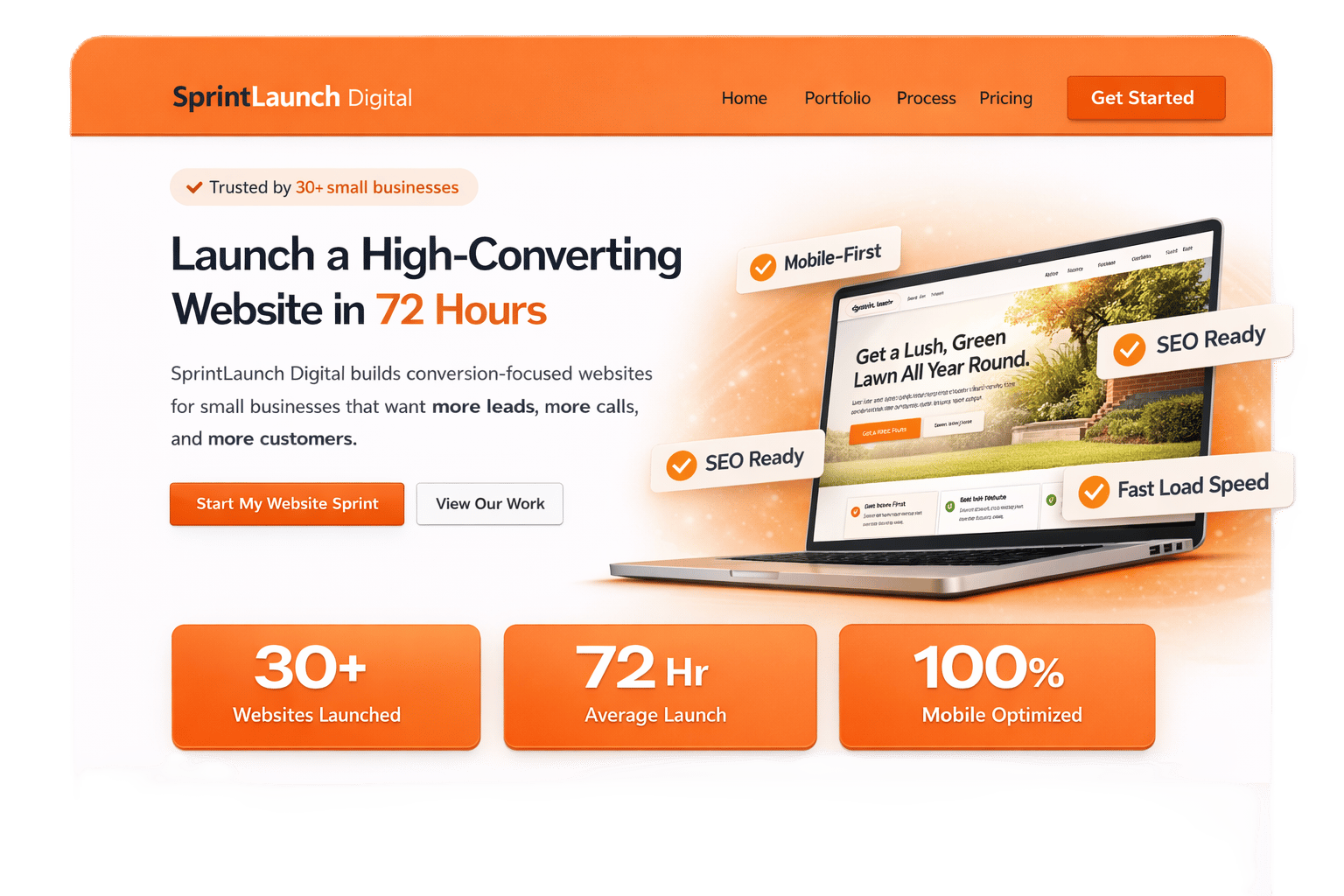
Your Website Should Bring You Customers
Not just look pretty.
At SprintLaunch Digital, we build high-converting websites in 72 hours.
✔ Mobile-first
✔ Fast load speed
✔ SEO ready
CHALLENGE💪
This Week’s Challenge: Three workouts. One week. Grow your Brain

Workout 1: Strength Training (Choose One)
Option A (Gym):
Squats: 3 sets of 8-10 reps
Pushups or Bench Press: 3 sets of 8-10 reps
Dumbbell Rows: 3 sets of 8-10 reps per arm
Rest 90 seconds between sets. Done in 30 minutes.
Option B (No Gym):
Bodyweight Squats: 3 sets of 15-20 reps
Pushups: 3 sets of as many as you can do
Lunges: 3 sets of 10 reps per leg
Same deal. Rest 90 seconds. Done.
Workout 2: Cardio
45 minutes of steady movement.
Brisk walk outside. Treadmill on an incline. Stationary bike. Jogging. Elliptical. Doesn't matter.
You should be breathing harder than normal but still able to hold a conversation. If you can't talk, you're going too hard. If you can sing, you're not going hard enough.
That's it. Just move for 45 minutes straight.
Workout 3: HIIT
Six rounds. Ten minutes total.
Pick a machine: bike, rower, elliptical. Or go outside and find a hill.
1 minute: Go as hard as you can. Sprint. All out.
2 minutes: Easy recovery. Slow pedaling, catching your breath.
Repeat six times.
Last round should leave you glad it's over.
The Rules
Spread them out. Don't do all three in a row. Rest days are when your brain actually grows.
Monday/Wednesday/Friday works. Tuesday/Thursday/Saturday works. Your call.
Done is better than perfect. If you're tired, do lighter weights. If you're short on time, do 20 minutes of cardio instead of 45. Just show up.
QUOTE OF THE WEEK 💬
“You've gotta dance like there's nobody watching,
Love like you'll never be hurt,
Sing like there's nobody listening,
And live like it's heaven on earth.”
― William W. Purkey

MERCH 👕

 Janelle: Women’s Tee |  Patrick: Coffee Mug |
 Melissa: Unisex Hoodie |  Rodney: Trucker Hat |
Spread the Word!
If you found this content informative, thought-provoking, entertaining, enjoyable, life-saving, or simply awesome, don’t be greedy! Share. It’s FREE!

Reply