- MOTIVSPRINT
- Posts
- The Three Joints Every Lifter Needs to Fix
The Three Joints Every Lifter Needs to Fix

Lyle Agagon
May 07, 2026
Sponsored by

EXERCISE 🏋️♂️

Most lifters skip mobility work. Then they wonder why their squat is stuck or their shoulder aches.
Mobility isn't a warm-up afterthought. It's a skill that makes every lift better and keeps you training for years instead of months.
Three spots matter most: your hips, your thoracic spine, and your ankles. Lock up any one of them, and your body compensates elsewhere. That compensation is where injuries happen.
Hips
Sitting all day shortens your hip flexors and tightens your hip capsule. When you squat, your hips can't fully open. Your lower back rounds, your knees cave in, or both.
The fix: hip 90/90 stretches, hip flexor lunges, and controlled articular rotations (CARs). CARs are slow circular movements that take your hip through its full range under muscular control. Do them daily. They take three minutes.
Add the couch stretch. It targets your hip flexor and quad at the same time. Hold for two minutes per side. If you have tight hips, this one will be uncomfortable. That's why it works.
Thoracic Spine
Your thoracic spine — mid-back, from your shoulders down to your lower ribs — is supposed to rotate and extend. Most people have lost both.
A stiff t-spine makes overhead pressing dangerous. Your shoulders compensate for the lack of upper back mobility. That's impingement waiting to happen.
Use a foam roller. Lie on it at mid-back level. Let your upper back drape over it. Move up and down a few segments at a time. Then add thoracic rotations: get on all fours, put one hand behind your head, and rotate your elbow toward the ceiling. Ten reps per side.
Ankles
Stiff ankles limit how deep you can squat. They affect how you land from jumps, how you walk, and how your knees track.
Test yourself: stand with one foot four inches from a wall. Drive your knee toward the wall while keeping your heel flat. If your knee can't touch the wall, your ankle dorsiflexion is limited.
Do 10 slow reps per side as your drill. Full-range calf raises also help — all the way up, all the way down. Strength and mobility at the same time.
How to Structure It
Don't try to do all of this every day. Pick two or three drills and do them consistently. Ten minutes before your lift beats nothing. Fifteen minutes on a rest day beats both.
You'll notice results fast. Better squat depth. Less tightness after training. Fewer aches. Mobility pays off quickly when you stop skipping it.
NUTRITION 🥑
Liver Health: What Actually Works
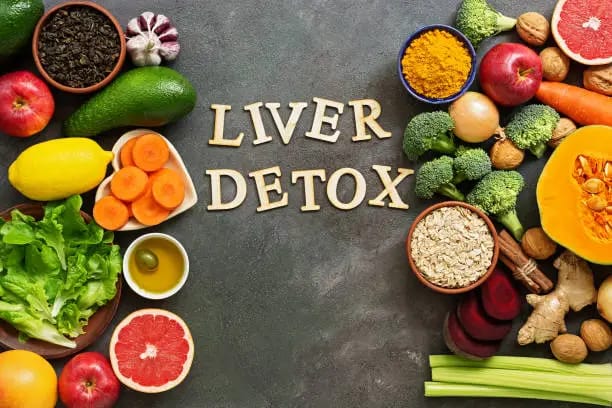
The word "detox" gets thrown around a lot. Most of what you see in wellness is marketing.
Your liver doesn't need a juice cleanse. It's already detoxing you 24/7. But that doesn't mean you should ignore it. Your liver regulates blood sugar, produces bile for fat digestion, metabolizes hormones, and stores glycogen. When it's stressed, everything downstream suffers.
Cut What Stresses It First
The biggest threats to liver health are alcohol, processed sugar (especially fructose), refined seed oils, and excess body fat. No amount of clean eating can outrun a liver that's still fighting these.
Cutting alcohol is the single most impactful thing most people can do for their liver. Even moderate drinking causes liver inflammation over time. That's not a scare tactic. It's a realiy.
Foods Worth Eating
Some foods have real benefits for liver function.
Cruciferous vegetables (broccoli, Brussels sprouts, cauliflower, cabbage) contain glucosinolates — compounds that activate liver enzymes and help neutralize toxins. Aim for at least one serving per day.
Beets contain betaine, which supports liver cell function and protects against fatty liver disease. Roasted or as juice, both work.
Garlic has sulfur compounds that reduce liver inflammation and oxidative stress. Use it raw or lightly cooked — high heat destroys most of the active compounds.
Fatty fish (salmon, sardines, mackerel) provide omega-3s that reduce liver fat and inflammation. Two servings per week is a solid baseline.
Green tea contains catechins that reduce liver enzymes and fat accumulation. Three to four cups per day is what most studies use. Black coffee also protects the liver — studies consistently show lower rates of liver disease in regular drinkers.
Supplements with Evidence
Milk thistle (silymarin) has the strongest evidence for liver support. It protects liver cells, reduces inflammation, and may help regenerate damaged tissue. It’s widely used in liver disease. Healthy people benefit too.
NAC (N-acetyl cysteine) is a precursor to glutathione, your body's main antioxidant. Low glutathione is common with liver stress. NAC is cheap and widely available.
Skip the Detox Products
Detox teas, juice cleanses, and liver flushes have no evidence behind them. Some may even cause harm. Your liver is remarkably resilient. Eat well, reduce alcohol, manage your weight, and let it do its job.
BIOHACKING⚡
Float Tanks: What They Are and Whether They Work
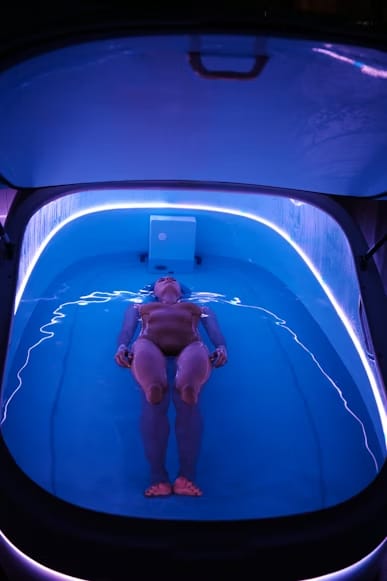
A float tank is a pod filled with 10 to 12 inches of water saturated with Epsom salt. The water is body temperature. The pod is dark and silent. You float on the surface without effort.
Almost all external sensory input disappears. No light. No sound. No feeling of gravity. Your brain has nothing to process except itself.
This is called Restricted Environmental Stimulation Therapy, or REST.
What Happens in Your Brain
Without external input, your nervous system downshifts fast. Heart rate slows. Muscle tension drops. Cortisol falls. A single 60-minute float session significantly reduces anxiety, stress, and pain perception. This is well-documented.
Floating increases activity in the default mode network, the part of your brain active during rest, introspection, and creative thinking. Many people report unusual mental clarity after a session. That's likely why.
It also reduces activity in the amygdala, your brain's fear and stress center. Meditation does the same thing. But floating gets people there faster, especially those who can't quiet their minds through traditional practice.
Physical Effects
The Epsom salt is magnesium sulfate. Magnesium absorbs through the skin during the float. Low magnesium is extremely common and linked to muscle cramps, poor sleep, and anxiety. Floating helps.
Muscle tension releases in the zero-gravity environment. People with chronic pain and sports injuries consistently report improvement. One study found that four sessions reduced pain and stress in athletes better than rest alone.
Mental Performance
Some athletes use floating for visualization. In total silence with no distractions, mental rehearsal becomes more vivid. NBA teams, Olympic training programs, and NFL teams have all used float therapy in recent years.
What to Expect
Your first float is an adjustment. Most people take 20 to 30 minutes to stop fidgeting and fully let go. The second or third session is usually more impactful than the first.
Sessions run 60 to 90 minutes. One to two floats per month is a common protocol. Weekly floating shows stronger cumulative benefits.
Cost is the main barrier. It costs $60 to $100 per session at most float centers. Home pods exist but run $5,000 or more.
Is It Worth It?
For stress, anxiety, and muscle recovery — yes. The evidence is solid. If you train hard or have a high-stress life and struggle to fully decompress, floating is one of the most efficient recovery tools available.
Try at least two sessions before judging it. The first one is mostly orientation.

CHALLENGE💪
CHALLENGE OF THE WEEK

Pick one mobility drill and do it every day for seven days:
• Hip 90/90 stretch — 3 minutes
• Couch stretch — 2 minutes per side
• Thoracic rotations — 10 reps per side
• Ankle dorsiflexion drill — 10 reps per side
One drill. Seven days. Notice how your body moves differently by the end of the week.
QUOTE OF THE WEEK 💬
"The body is made to move. If you don't use it, you'll lose it." — Jack LaLanne

MERCH 👕

 Janelle: Women’s Tee |  Patrick: Coffee Mug |
 Melissa: Unisex Hoodie |  Rodney: Trucker Hat |
Spread the Word!
If you found this content informative, thought-provoking, entertaining, enjoyable, life-saving, or simply awesome, don’t be greedy! Share. It’s FREE!

Reply